Prevention should not depend on proximity, insurance, or digital confidence.
LifeLine is a research-stage concept designed around a simple problem: many preventable health emergencies begin long before a person reaches a hospital. I developed LifeLine to explore how lower-cost home monitoring, reminders, clearer trend visibility, and local-resource navigation could make preventive care more accessible.
Explore the ResearchReplace with concept deck or prototype screens
Access gaps can become silent risks.
LifeLine began with an interest in the gaps between people and preventive care: long distances to care, lack of insurance, inconsistent monitoring, medication complexity, and digital barriers that make it harder to act before a concern becomes an emergency.
The concept was designed around a central question:
"How might preventive health support become easier to access before a crisis begins?"
A connected concept—not just a device kit.
At-Home Monitoring Kit
A proposed kit concept including a blood-pressure monitor, pulse oximeter, smart scale, and glucose meter—designed to surface health patterns before symptoms escalate.
Simplified App Experience
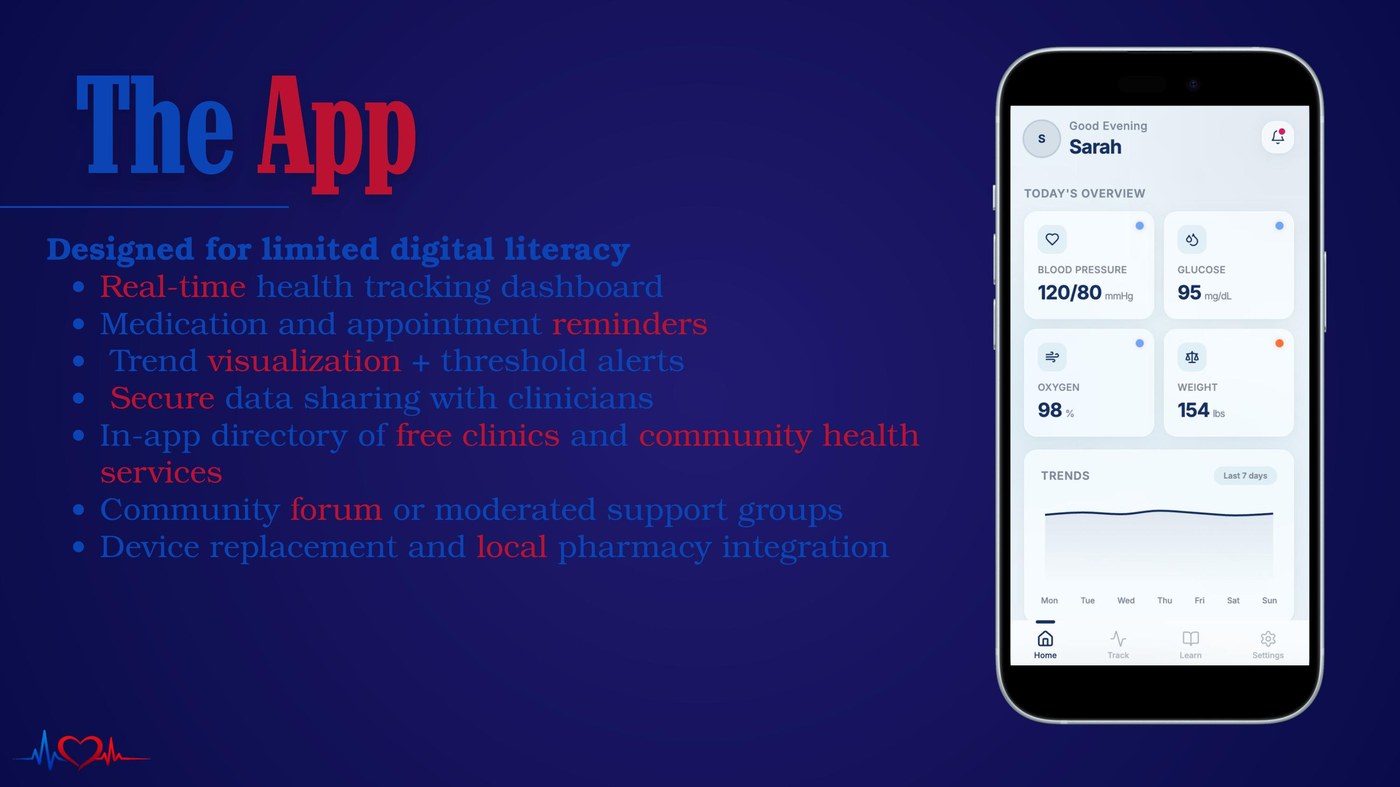
A proposed app interface designed for limited digital literacy, with dashboards, reminders, trend visualization, alerts, and care-resource navigation—clarity over complexity.
Community Resource Navigation
A concept for connecting users to free clinics, community health resources, local pharmacies, and possible support services—reducing the barrier between awareness and action.
Preventive Design Model
A non-diagnostic model centered on helping users notice patterns, stay organized, and prepare for conversations with healthcare professionals—never replacing clinical judgment.
Starting with questions before building solutions.
To test whether structured at-home monitoring could be useful in chronic-care management, I designed, distributed, and collected a survey of healthcare professionals. The survey gathered 28 responses from physicians, optometrists, medical assistants, and related healthcare professionals across multiple U.S. states.
The results were directional rather than definitive: 25 of 28 respondents rated the concept a 4 or 5 out of 5 for potential usefulness in chronic-care management.
"In health-related work, language, privacy, affordability, accessibility, and evidence all need more care than a standard consumer product pitch."
LifeLine — Concept ReflectionExploring preventive care through practitioner insight.
As part of early concept development, I personally conducted an interview with Ashish Sethi, MD, MHA, Chief Medical Officer, about the value of proactive rather than reactive care.
The most effective intervention is preventing the crisis before it begins.
From a care-access problem to a service model.
The concept was designed as a connected system—not a standalone device or app. Each component was intended to support the others, reducing friction between monitoring, understanding, and acting.
Turning the concept into something people could interact with.
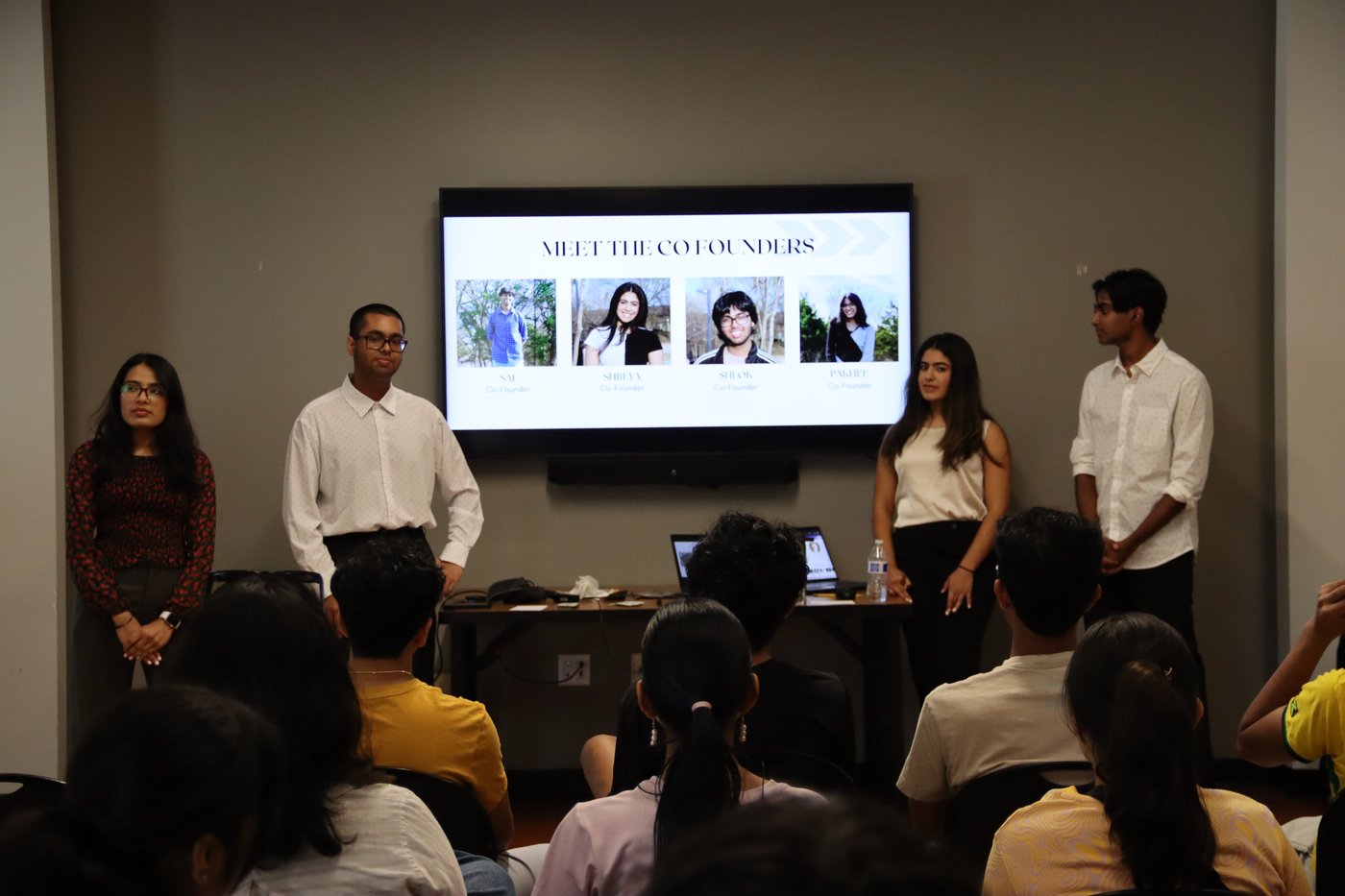
I independently developed the problem framing, research, product model, concept strategy, and pitch materials for LifeLine. For visual prototyping, I collaborated with Deon Yesudas, who created the app mockups and clickable prototype used in competition presentations.
Using pitch environments to pressure-test the idea.
Pitch competitions gave me structured opportunities to articulate the problem, explain the concept, and receive feedback from judges with diverse backgrounds. Each round clarified both the concept's strengths and what still needed sharper answers.
What a responsible next step could look like.
The concept deck explored a potential pilot involving community partners, structured feedback, affordability testing, and measurement of user engagement. These were planning assumptions, not completed outcomes.
Responsible innovation starts with precision.
Research Before Claims
A compelling idea is not the same as evidence. Early feedback helped shape questions, but it also clarified what needed to be tested properly—and made the difference between a pitch and a proof point more obvious.
Simplicity Is a Product Decision
For users with limited time, access, or digital confidence, clarity can matter more than feature volume. The most important design constraint was not technology—it was the experience of someone who rarely uses health apps.
Health Concepts Carry Higher Stakes
Language, privacy, affordability, accessibility, and evidence all need more care than a standard consumer product pitch. The discipline of being precise about what is and is not proven became central to how I developed and presented this work.
Evidence & Artifacts
Research documentation, concept materials, and competition records. Private items are marked and withheld from the public version.
Items marked as requiring redaction or review are development placeholders. The survey export must be redacted of any respondent-identifying information before display.